Book soon Openers · Langstaff
Emergency Release Repair in Langstaff
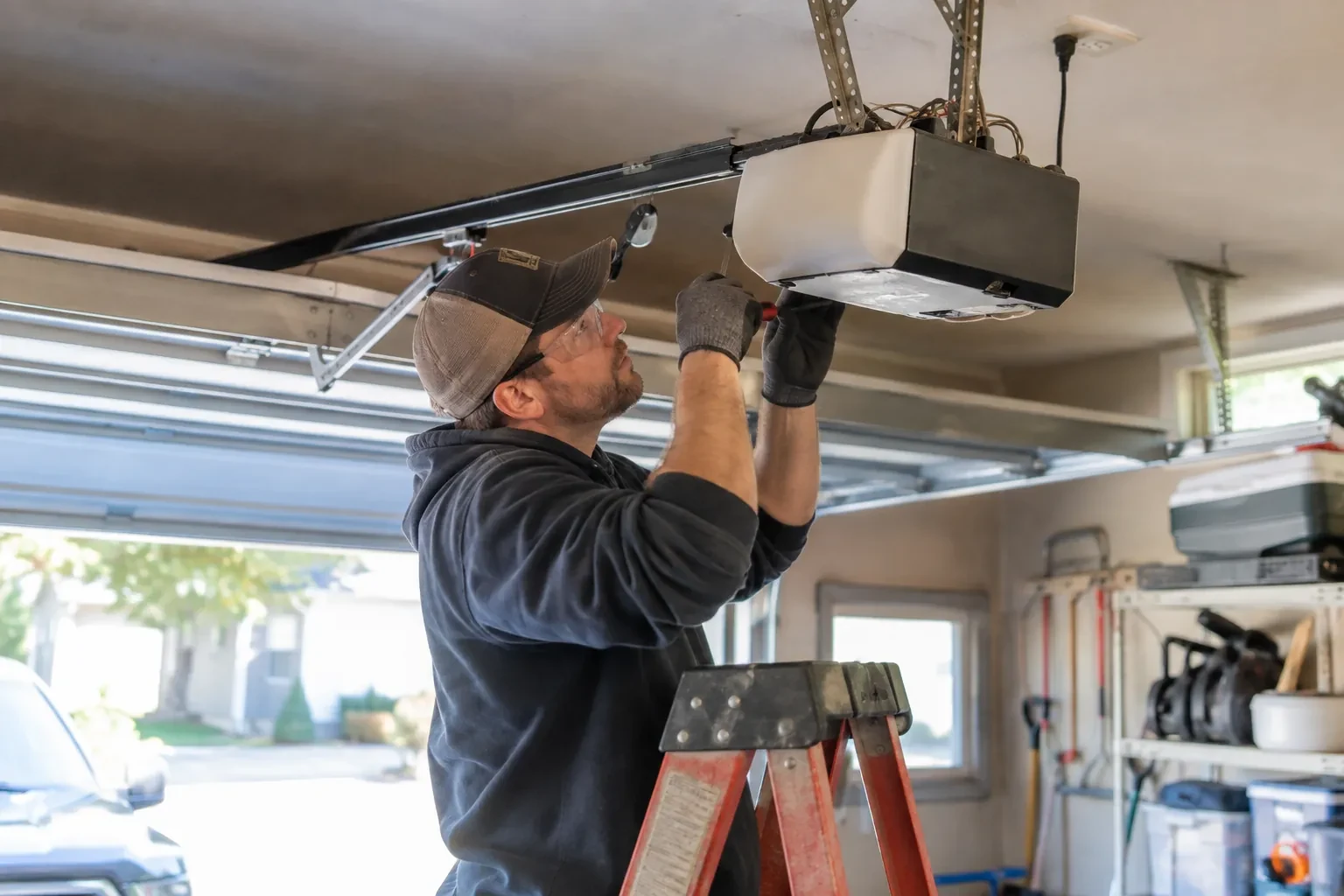
Since the new door went in, the red handle has hung just below the ceiling, a stepladder's height above anyone in the household. During last week's blackout your daughter stood under it with a broom, unable to hook it down.
Call now · open 24/7(289) 514-2437Right now
Before the door is looked at
Call (289) 514-2437, open 24/7.
Pull the release with the door fully closed whenever possible, and keep the opening clear as you do. Once the trolley lets go, the door is held by its springs alone, and a closed door can still shift unexpectedly.
Lift a door by its handles or the gripping points on the panel face, never at the joint between sections, which closes as the door bends around the track.
Never drive a vehicle at a closed door to get out; the door collapses and the stored tension in the counterbalance is released. Use the release, the outside key release, or a technician.
In plain words
What gets repaired depends on which link failed. A cord that rotted or snapped is simplest: a new rope and red handle, cut so the handle hangs no higher than about 1.8 metres and clears the car roof. A lever that will not stay latched needs its spring or the lever itself replaced. A trolley with worn latch teeth, or one driven hard into the stop bolt, is freed, adjusted or swapped for the assembly made for that opener. On the outside key release, a seized cylinder, a stretched cable or a lost key each has its own fix. The technician names the part before work begins.
How the visit goesA previous owner knotted the release cord around the rail and stacked storage shelves right beneath it. You only discovered this in the dark, with the power off, a flashlight in your teeth and a car that needed to be somewhere.
Emergency Release Repair · Langstaff
How the visit goes
- 1
The outside key release, if there is one
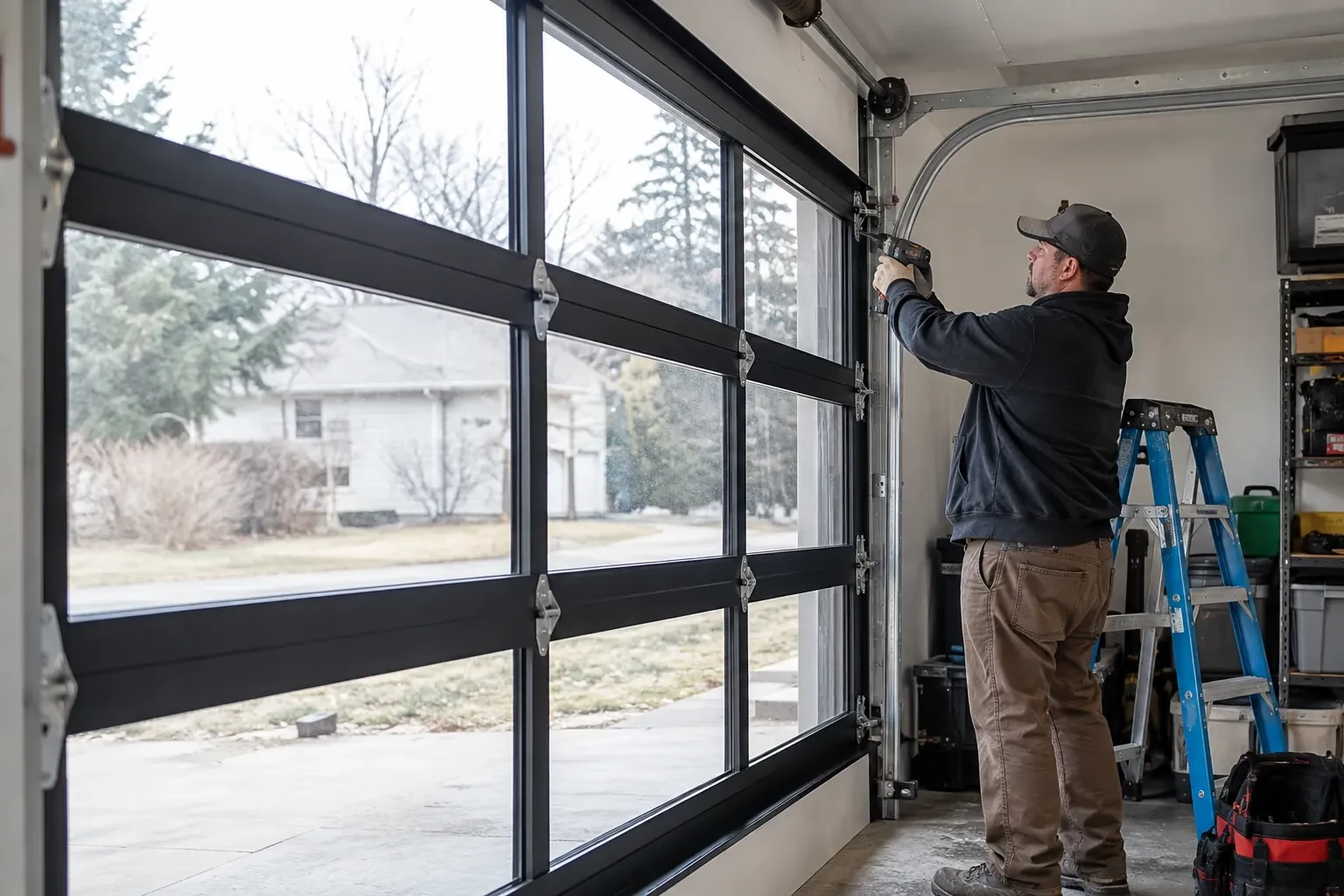
Many detached garages and some attached ones have a small keyed cylinder, set in the top section on a sectional door or at mid-height on others. The technician checks whether one is fitted, whether the key is available, and whether the cylinder turns and pulls out as designed. Behind it, a cable runs to the trolley lever; it is traced for kinks, stretch, a detached end or a route that snags on a section joint as the door bends. In winter the cylinder is checked for salt crust and ice. Where the garage has no other door, this release is the way in when the opener is silent, so its condition is treated as part of the same job.
- 2
Replacing the trolley or carriage
Latch teeth that have worn round, a cracked trolley body or a carriage bent when a door dropped onto it call for a new assembly. The technician slackens the drive, disconnects the arm from the door, slides the old trolley off the rail and fits the replacement that matches the opener's model and rail type, then reattaches the arm with new clevis pins and clips. The chain or belt is set to the correct tension, the trolley is run to the door and latched, and the opener is cycled until the technician is satisfied the connection is solid at both ends of travel. Old parts are shown to you before they leave.
- 3
Keys for the outside release
Where an outside key release was fitted or repaired, you leave with two keys and the cylinder proven from the driveway. One key belongs on your ring; the other belongs somewhere outside the garage, with a neighbour or in a lockbox, since a spare inside the garage is behind the very door it opens. In winter, keep the cylinder face clear of slush and give it a puff of dry lock lubricant before the cold sets in. The release only disconnects the door; lifting still happens by hand, using the door's handle, so the balance check the technician did today is what makes that lift easy.
In the van
- Hole saw for the top section
- Trolley and carriage assembly
- Door arm, clevis pins and clips
- Track clamps to hold the door
- 2x4 offcut for the reversal test
What affects the quote
- 1
Outside key release: repair or new
Renewing a cylinder, cable or keys on an existing outside release is one line; cutting the door and fitting a complete kit where none exists is another, and both are named separately.
- 2
Cord, lever or trolley
A rope and handle is the smallest item; a lever and spring sits in the middle; a complete trolley or carriage assembly is the larger part, and the diagnosis says which one you need.
- 3
Freeing versus replacing the trolley
A trolley jammed on the stop bolt is freed, adjusted and reused when its latch is sound. One with worn teeth or a cracked body is replaced, which changes both parts and labour.
Same fees day, night or weekend.
Emergency Release Repair: questions
Would battery backup mean I never need the release?
It covers most outages: the battery opens and closes the door on stored power, so the release stays on its hook. It is a wearing part that needs replacing every few years, and a status light or beep tells you when. The release is still the fallback for a flat battery or an opener that has itself failed, which is why the two are checked together. Many households on outage-prone streets keep both in working order.
Why should the door be closed before I pull the handle?
Because once the trolley lets go, the door is held only by its springs. A well-balanced door will stay put wherever it is, but a door whose springs are tired can drop, and one that is over-tensioned can rise on its own. Even with the door already on the floor it can still move unexpectedly, so keep the opening clear whenever the release is pulled. The industry checklist and opener makers give the same instruction: disconnect with the door fully closed.
Why are the reversal tests done after a release repair?
Because freeing a trolley, changing a trolley or re-tensioning a chain or belt disturbs the travel limits and force settings the opener relies on. The tests prove those settings are still safe: closed onto a 2x4 lying flat, the door must reverse on contact; with something passed through the photo-eye beam while closing, it must stop and rise. They take a minute and are the same checks the standard asks of any working opener.
Openers & Access
Bigger photo, sooner job: Emergency Book soon Plan ahead
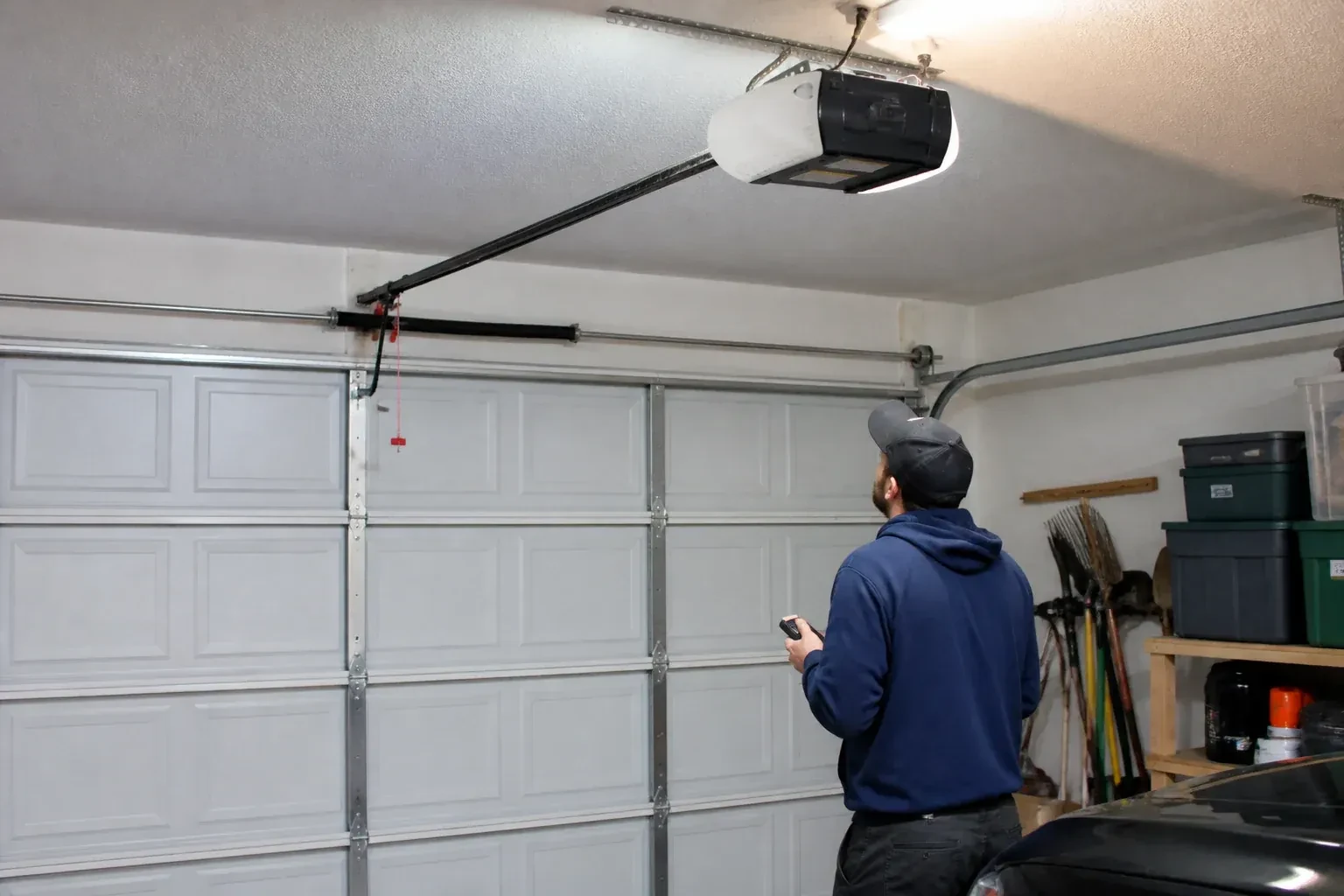 Book soonGarage Door Opener Diagnosis and RepairThe door stops partway up for no reason, or opens fine and then refuses the next time.
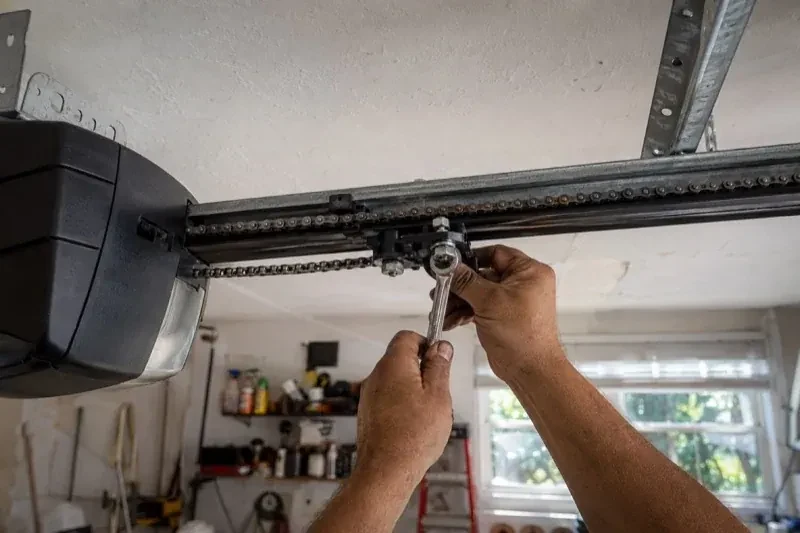 Book soonChain-Drive Opener RepairThe door opens about a third of the way and stops.
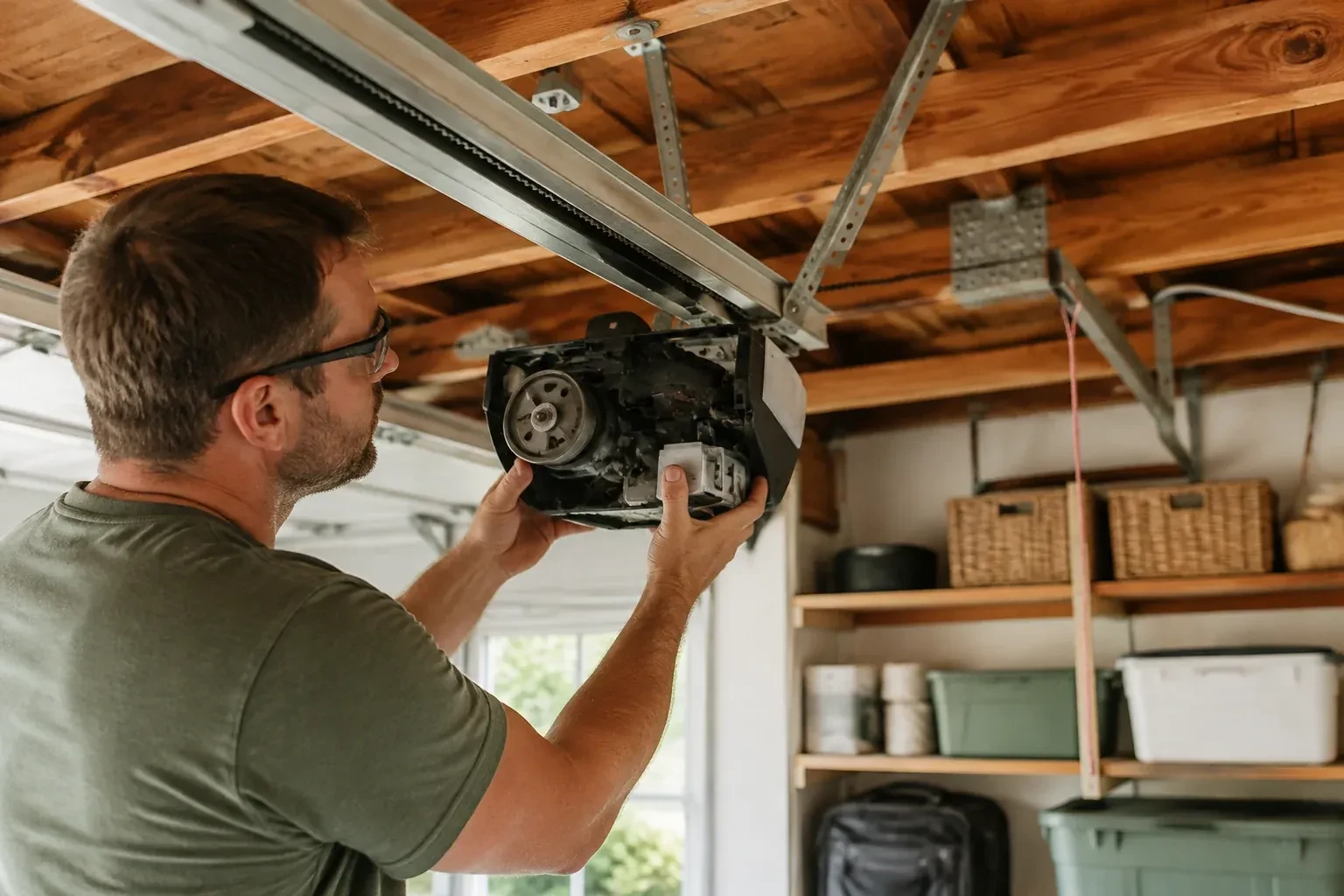 Book soonBelt-Drive Opener RepairIt is minus twenty in the detached garage and the door climbs in jerks, the belt stiff as a board.
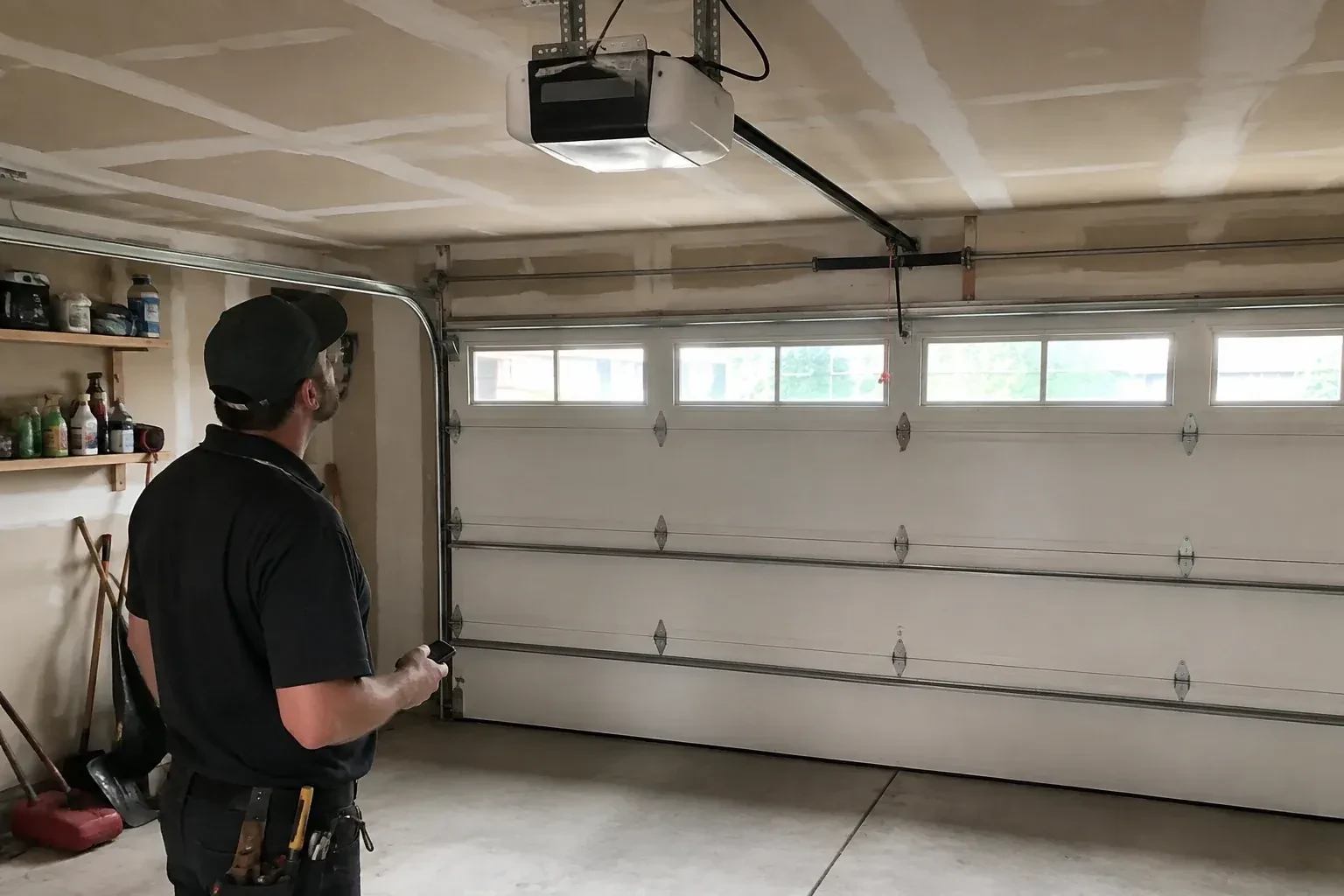 Plan aheadGarage Door Opener Replacement
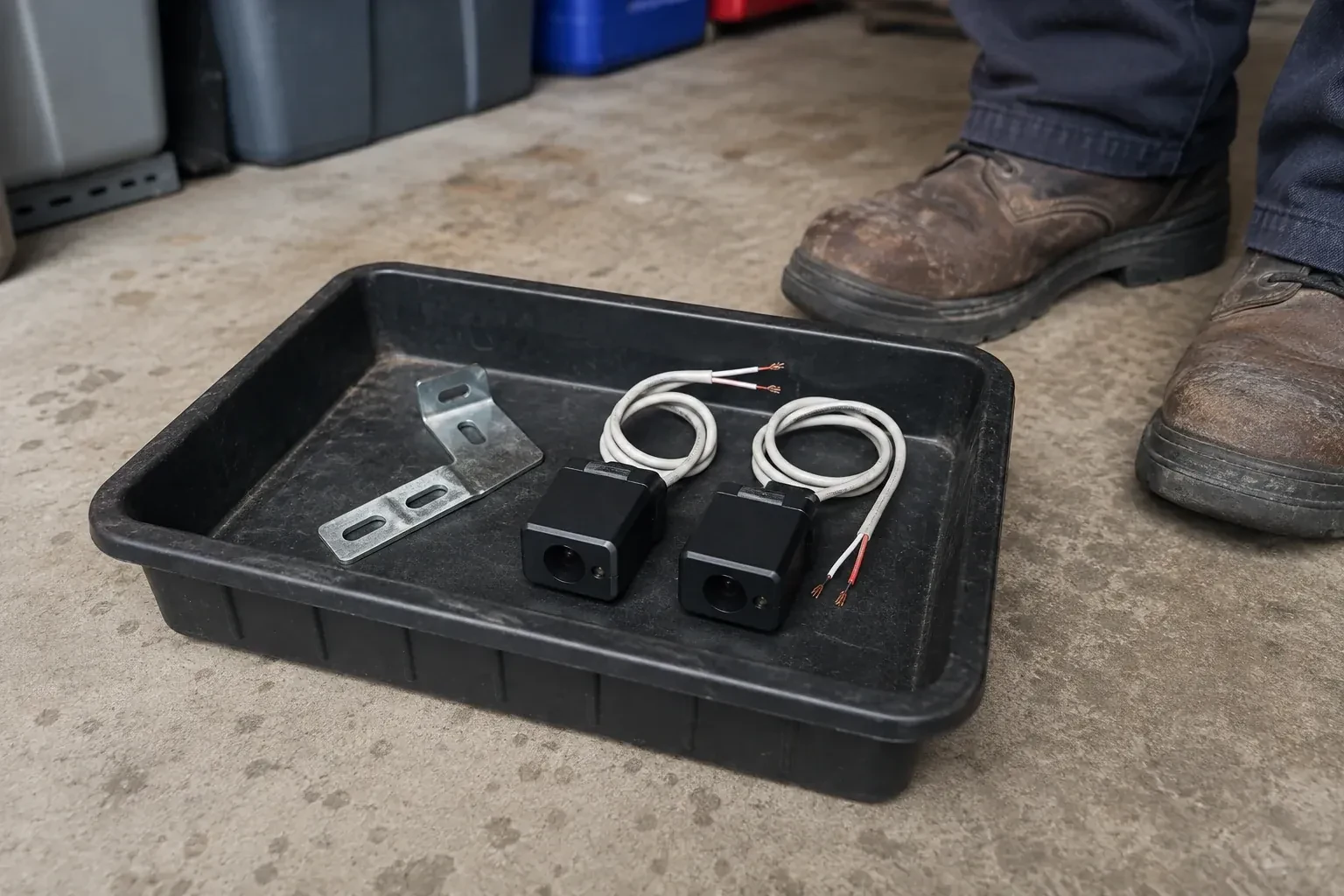 Book soonPhoto-Eye Sensor Alignment or ReplacementThe small light on one of the sensors near the floor has gone dark, or it flickers when someone walks past the track.
York, Ontario
Langstaff information
- Town
- Langstaff, York, Ontario
- In business
- 31 years
- Hours
- Open 24/7 · nights, weekends and holidays, same fees
- Phone
- (289) 514-2437
- Visits
- On-site assessment preferred. Request a visit or call.
What the census means at the door
8%
Newer homes. About 8% of homes in Vaughan were built in 1980 or earlier, according to the 2021 Census.
Where homes are newer, the garage is usually attached and often has living space over it, so the door forms part of the insulated envelope. Insulated panels, tight perimeter weatherstrip and a good bottom seal make a real difference to the comfort of the room above.
63%
Mostly houses. Single-detached houses make up about 63% of homes in Vaughan (2021 Census).
Households in detached homes often have several remotes, a keypad and a phone app between family members and their cars. We keep all of them programmed to the opener, replace the ones that have failed, and explain how to add a new one when a car changes hands.
Open 24/7
Request a visit
Since the new door went in, the red handle has hung just below the ceiling, a stepladder's height above anyone in the household.
Call now · open 24/7(289) 514-2437- On-site assessment preferred
- Same fees day, night or weekend
- 31 years in business